Introduction
In this post I will speak of spearfishing safety. I will mention safety guidelines towards others and for yourself.Safety Issues
First and foremost, you should never spearfish alone, you need to find a dive buddy with whom you feel safe, both of you need to know what to do in the event of a problem. The types of problems you can encounter are (in no particular order, there are others):- Shallow Water Blackout (SWB): this is were your body no longer has enough oxygen, you blackout usually swimming back up to the surface or even after you have reached the surface and breathed fresh air. This is IMO the most dangerous thing that can happen because it gives no warning at all, your body doesn't react to not having enough oxygen but instead reacts to having too much carbon dioxide (this is what triggers the urge to breath) and you never realize you don' t have enough.
- Getting tangled in some sort of net, line, etc: this is another way to drown, it can easily be avoided though if you carry a knife or scissors.
- Getting stuck in an underwater cave: this can be avoided also by simply not going into caves, if a big fish swam inside then too bad, you weren't fast enough and it won, get over it.
- Strong underwater current: this is harder to avoid since you cannot see it before swimming into it. If you get caught in one try to swim up quickly and beware of rocks.
- Sharks: these are a problem in certain parts of the world (mostly tropical and sub-tropical).
- Getting bashed on rocks: this can usually be avoided by not going in rough water, it is a bit trickier when you get swept up by a strong current.
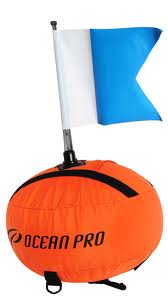
- Boats: in most places you have the obligation to have a buoy with a dive flag, this warns boats you are in the water, the boats should stay more than 50m from a buoy. This is the nice and dandy theory, unfortunately some boat captains either don't see the buoy or don't care. If you encounter those then if you can take a picture of their identification number and report them to the authorities. I am not saying this to be mean, but this is dangerous for you and they will remember to look (and respect the distance) when confronted by the authorities, I know, it sounds lame, but this is your and other spearfishermens' lives in danger and as a captain they are required to respect this, just like a car driver has to look out for motorcycles, bicycles and pedestrians.
- Your dive buddy: this may surprise you (or not), but many accidents involve your buddy shooting you. As a general rule you should never point your speargun towards a human being, you should always have the safety one until the last possible moment (before you shoot, this is easier with some spearguns than others, see my speargun post's section on different speargun brands' safety mechanisms) and you should never have a loaded gun outside of the water (this is often by law). It is also recommended that you hunt with one gun and take turns, when one is below the other observes him/her. This has the added safety that you rest and get your oxygen levels up again (to help prevent SWB) and you can react if your buddy gets in trouble. Some people hunt one in from of the other with a big distance in between each other, others hunt in parallel also with lots of distance. When the water is murky it becomes more difficult. You should use the same safety rules as you would when using a firearm.
- Hypothermia: this is a problem mostly in cold waters and when you don't wear the correct wetsuit. In reality it can happen even in tropical waters if you stay long enough, the water is colder than your body temperature and has higher thermal conductivity than air so it will literally suck the heat out of you. Most of the time you can be safe by not going in in cold water without the proper equipment and by not staying longer than you should.
- Cramps: this can be a problem if you are under water. There is no sure way to prevent this or know it is coming, you can only eat potassium and magnesium regularly to help guard from it but that is all. I read of a person who had this happen to his legs and he used his DSMB to get back to the surface.
Safety equipment & guidelines
There are some guidelines and equipment you can have to make spearfishing safer (by problem):General
- Quick release weight belt: this is a good idea to have, most weight belts are like this. It means that if you have an issue and you have to swim up as fast as possible, you can quickly drop your weight belt. For this reason I would not up anything expensive on the weight belt, some people put their dive knife on it but they could hesitate to drop the belt because if that. YOUR LIFE COMES FIRST, your dead body has no use for a dive knife. Here are examples of a SCUBA type belt (left) and a spearfishing (Marseillaise) belt (right):


Shallow Water Blackout (SWB)
- Freedivers Recovery Vest (FRV): this is an inflatable life vest that is triggered by either going too deep, staying too long under or not confirming you are conscious after reaching the surface. It is a bit pricey but worth it, especially if you are a bad boy and dive alone. It will bring you back to the surface and flip you on your back, see here for more info, have a look at these pictures:


- Dive computer: a dive watch with depth alarms, dive time alarms and surface recovery alarms; these are different from SCUBA dive computers. Some SCUBA dive computers that are wrist watches have some of these functions, like the Suunto D4i. Other dive computers are specifically made for freediving, like the Aeris F10v2, Aeris F11, Beuchat Mundial 2, Mares Nemo Apneist, Sporasub SP1 Freediving, Sporasub SP2 Freediving and Cressi Edy II. The alarms allow you to understand where you are in regards to know your depth (how long it will take you to swim back up), time under (an idea of how much oxygen you have left), surface recovery time (how long you have to wait until your next dive to be fully oxygenated).
Sharks
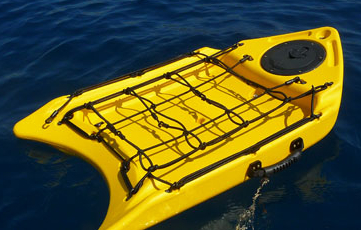
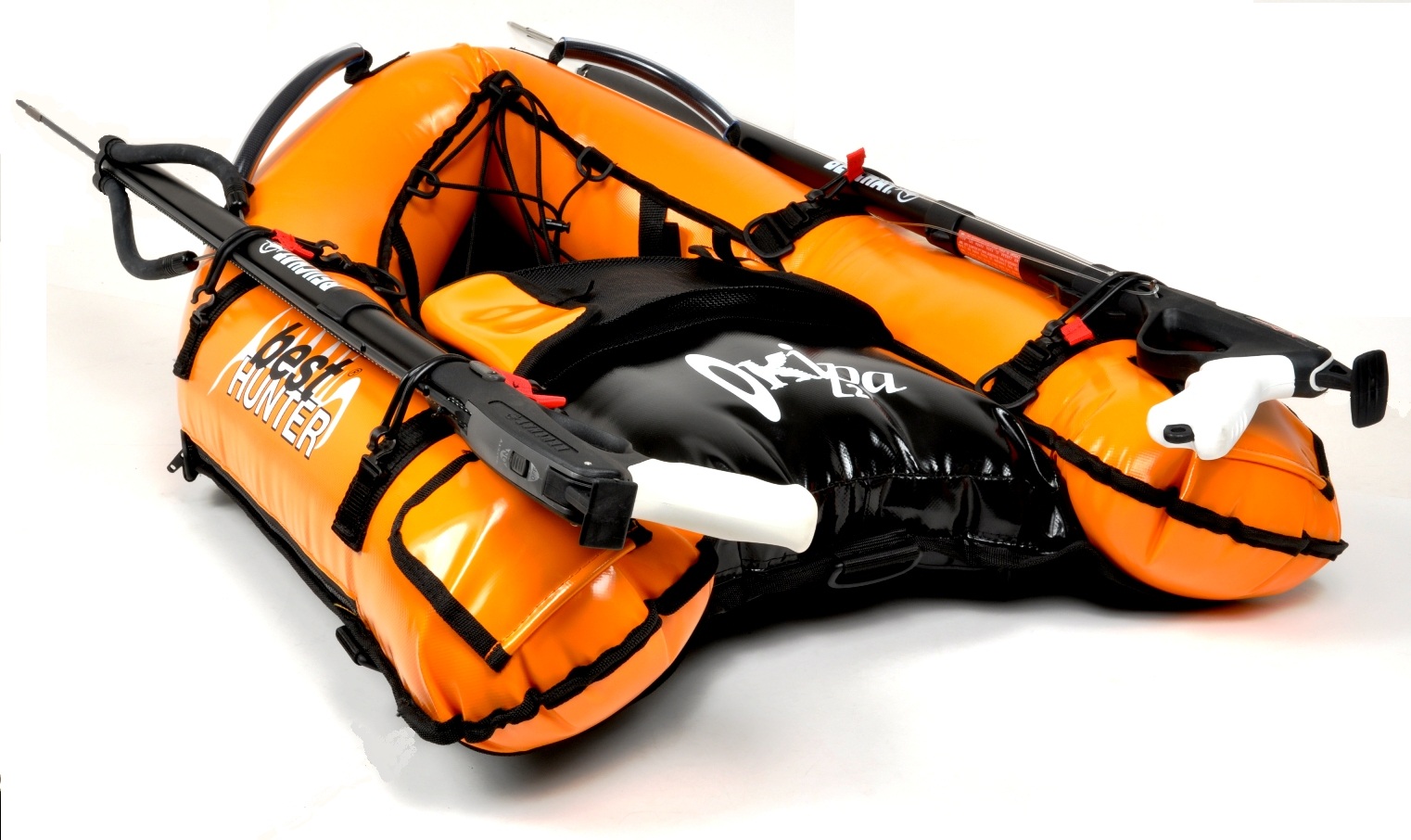
- Using a buoy with a stringer: this keeps your catch away from you, the best is to have two buoys, one for the catch and one for yourself. If you have you catch in the water, they will go after it, this is why YOU SHOULD NEVER CARRY YOUR CATCH ON YOU. If you can, always keep your catch out of the water in places that have lots of sharks.
- Stay calm, if you are agitated and move in a distressed manner they will be attracted to you. They are curious animals so just because you see one doesn't mean they want to eat you; most of the time they scope you out and leave.
- I don't recommend trying to stab, shoot or spike the shark unless it is of last resort, sharks are curious animals and will swim close to you to check you out. If they come too close, you can prod them with the metal tip but not stab them, stabbing or shooting them will only make them mad. Usually the contact with something metallic will make them less curious.
- Having a metal spike attached to the gun's muzzle can help you detour them, some spearguns have this by default. This is useful because if the spear is not on the speargun and a shark shows up you have the spike to help keep the shark away. I would use a line setup that allows you to keep the gun once you have shot a fish, either with a reel (and lots of line) or a breakaway setup. A good example of a shark safe gun is the Speardiver Carbon Elite Speargun (no longer available):
 Shark spikes can cause other issues though, they are dangerous. For example if you shot a powerful fish and you are handling it via the shooting line and it darts off, the line will slide through your hands and the speargun could stab you in the back, legs or even head. A safer solution would be a retractable shark spike, see here for a discussion concerning this.
- You can have powerheads for last resort if you get a shark that does not get the point, these are essentially aluminium cylinder that fire on the point of your speargun and have a bullet at the end. The spear point acts like the firing pin and will detonate on impact with the shark. There are reusable types and one use types. The one use types are supposed to be less prone to misfiring since the bullet is fully encased/watertight (they are anyways a last resort safety feature, a bit like an airbag in a car). Reusable types allow you to use them several times as the name implies but you should use a new bullet each new hunting session to be sure your bullet will work when needed. Here is a good example of one-use powerheads (Speardiver Quick Slip-on Powerhead) with a convenient pouch (Speardiver Powerhead Belt Pouch):

 and also Neptonic's new newly designed reusable K.O. Powerhead with has a dual safety design:

and also Neptonic's new newly designed reusable K.O. Powerhead with has a dual safety design:

- Having a knife: don't get excited, this will almost never be of any use, sharks are too fast and you are safer further away from them, but push comes to shove...as a last resort.
- Boat/shore: yep, get out of the water but do not turn your back to the shark.
Boats
- Buoy, flag & floatline: this can be attached to yourself or to your speargun. If you attach it to yourself be careful about becoming tangled/attached to something. If you attach it to your speargun it helps you from losing it in case you shoot a big fish but you could become separated from the buoy in this case, both have pros and cons. either way the boats can see you are around and steer clear. See here for more info.
Tangled
- Knife or scissors: in case you get caught up in something you can cut your way out. See the info about the quick release weight belt above and look here for more info about knives.
Hypothermia
- Wetsuit: an adapted wetsuit will guard against this, you will still be limited on how long you can stay in the water depending on the quality of the suit, its fit, the thickness, the density of the neoprene, the type/cut, dry/semi-dry/wet, etc. Beware of overheating however! See here for more info on wetsuits.
- Boat/shore: get out of the water, if your wetsuit is lined you will lose more heat with the wind so either wear a wind breaker, get out of the wetsuit and into cloths or go inside.
Cramps
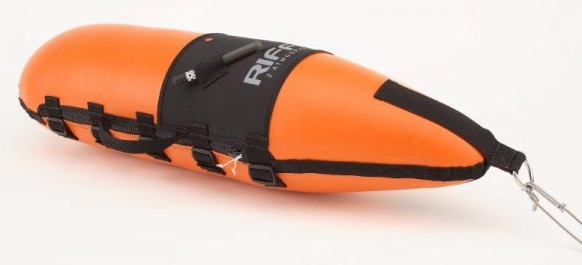
- Delayed Surface Marker Buoy (DSMB): aka CO2 inflatable safety sausage, this can be useful to go back to the surface in case you have a cramp or if you have to bring your buddy up fast. See here for more info. Here is an example:

- Freedivers Recovery Vest: (see Shallow Water Blackout above), it has a manual inflation latch:

I hope this information is helpful to someone, please correct me (add a comment) if you see something wrong and add comments or extra info.